Aircraft ownership is not only an aviation decision. It is also a capital, VAT, tax and structuring decision.
When people think about buying an aircraft, they usually focus on the purchase price. A €120,000, €200,000 or €350,000 aircraft may look attractive on paper, but the purchase price is only the first part of the financial picture.
Even if the aircraft flies very little, the owner may still need to pay hangarage, insurance, annual inspection costs, maintenance reserves, database subscriptions, registration costs and eventually engine, propeller or avionics work.
That is why the way in which the aircraft is acquired and held can matter almost as much as the aircraft itself.
A good ownership and tax structure can materially reduce the real cost of aircraft ownership. A poor structure can make the same aircraft much more expensive than necessary.
In Europe, VAT can be one of the largest cost components in an aircraft purchase. If an aircraft is bought privately, VAT is usually paid as part of the price and cannot normally be recovered.
For example, if an aircraft is advertised at €200,000 plus VAT and the applicable VAT rate is 21%, the VAT alone is €42,000. The total cash price becomes €242,000.
If the aircraft is acquired through a properly structured VAT-registered arrangement, there may be a possibility to deduct or recover VAT. This can materially change the economics of the purchase.
VAT recovery is not automatic. It depends on the structure, use of the aircraft, documentation, local rules and whether the aircraft is genuinely connected with an economic activity.
A clear VAT position can also make an aircraft easier to sell later. Business buyers, companies and structured co-ownership groups may prefer aircraft where the VAT history is clear and properly documented.
By contrast, aircraft with unclear VAT treatment may raise questions for buyers: was VAT properly paid, can it be reclaimed, is there hidden tax risk, and can the aircraft be resold without creating another issue?
In practice, tax clarity can become part of the aircraft’s commercial value.
The second major tax issue is where the purchase money comes from. Many private buyers first need to extract funds from a company before buying an aircraft personally.
That can trigger salary, dividend or other personal taxation before the aircraft is even purchased. Depending on the jurisdiction, this may significantly increase the amount of gross company profit required to fund a private purchase.
If the aircraft is acquired through a company or properly structured vehicle, it may be possible to use capital before personal income tax is triggered. This can make the same aircraft financially easier to acquire.
This is not about avoiding tax. It is about ensuring that the ownership structure, business use and capital flow are properly aligned from the beginning.
The strongest financial effect often appears when two concepts work together: VAT recovery and avoiding an unnecessary extraction of company funds into personal income before the aircraft is acquired.
A private purchase may require taxed personal funds and VAT-inclusive pricing. A properly structured acquisition may, in the right circumstances, allow the aircraft to be acquired through the structure with a clearer VAT position and better use of capital.
The difference can be substantial, especially for higher-value aircraft.
Co-ownership creates additional tax questions. Many groups assume that because they are only splitting costs, there are no tax consequences. That assumption can be dangerous.
Payments between members, maintenance reserves, monthly contributions or reimbursements may be interpreted differently depending on the jurisdiction and structure.
Tax risk is usually higher where:
The legal structure, tax structure and reserve model need to fit together. Otherwise, a simple cost-sharing arrangement can unintentionally create tax complexity.
The best time to think about tax is before the aircraft is purchased, not after. Once the acquisition has already been completed, some options may be more expensive, more complicated or impossible to implement.
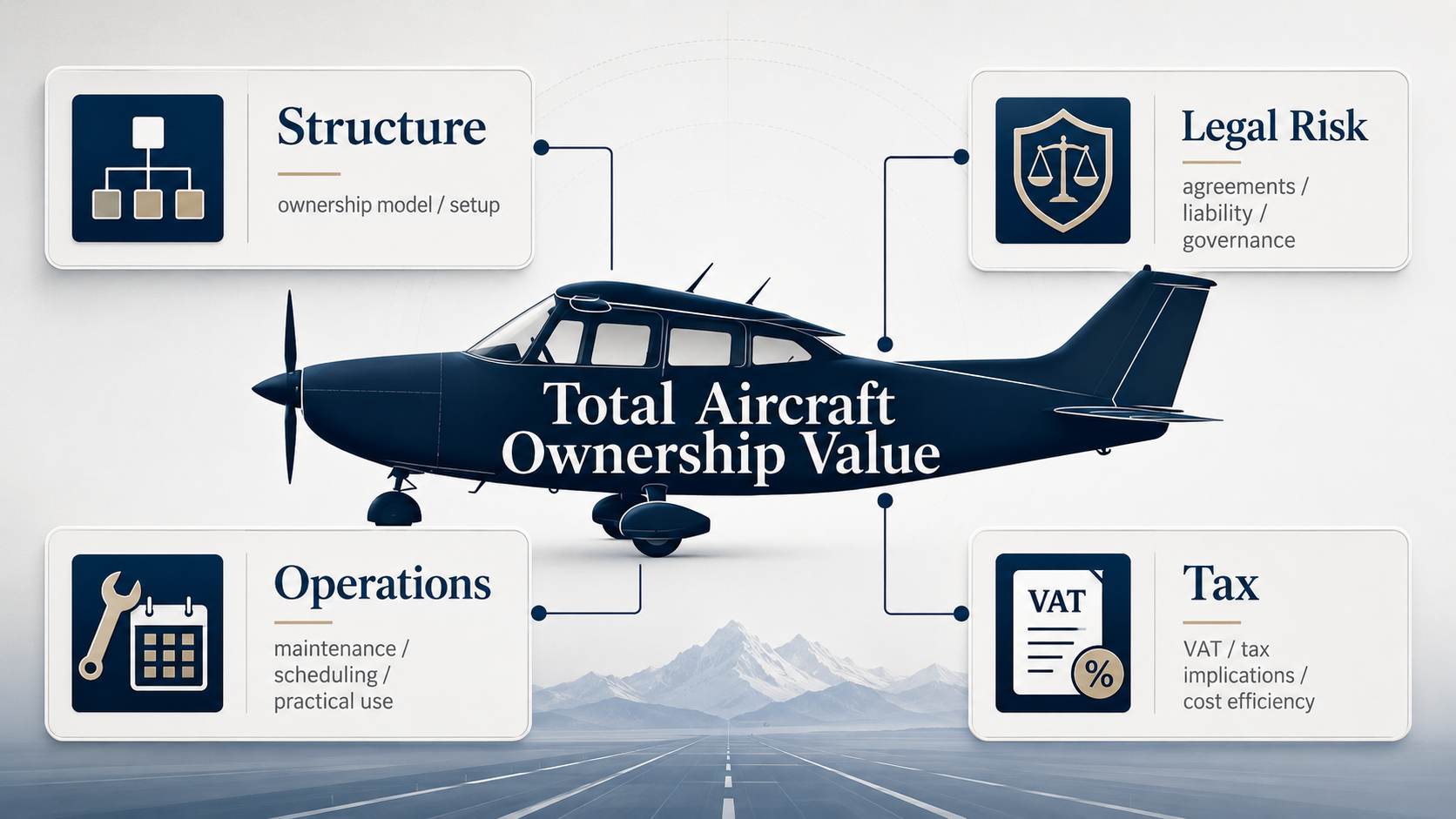
A well-designed structure should answer who owns the aircraft, who pays for it, where the money comes from, whether VAT can be deducted, how reserves are held, whether payments are capital contributions or service payments, and how the aircraft may later be sold.
Aircraft ownership should be enjoyable to use, but also efficient to hold. That requires legal, tax, financial and operational planning to work together.
If you are considering buying an aircraft, moving an aircraft into co-ownership, or using company funds to acquire one, Invictum Aero can help you assess the ownership, VAT, reserve and tax structure before you commit.